I. Lithium battery assembly method
1. Prepare materials and tools:
The following materials and tools are required to assemble lithium batteries:
- Lithium battery monomer: choose the appropriate lithium battery monomer according to your needs, common are lithium-ion batteries, lithium polymer batteries, etc.
- Protection circuit board: used to monitor and protect parameters such as voltage, temperature, and current of lithium batteries.
- Wire: used to connect lithium battery monomer and protect the circuit board.
- Battery clip: used to fix lithium battery monomer and protect the circuit board.
- Battery pack housing: used to fix and protect lithium battery packs.
2. Check the materials:
Before assembly, it is necessary to check whether the lithium battery monomer and protective circuit board are intact and ensure that their specifications and parameters meet the requirements. Special attention should be paid to parameters such as the capacity, voltage and maximum charge and discharge current of the lithium battery monomer to ensure that it is suitable for the required application scenarios.
3. Connect the protection circuit board:
Connect the protection circuit board to the lithium battery monomer to ensure that the connection is stable and connect correctly according to the pins of the circuit board. Generally speaking, there will be pins marked with positive and negative poles on the protective circuit board, which need to be connected to the positive and negative electrodes of the lithium battery monomer.
4. Fixed protective circuit board:
Use tape or other fixing methods to fix the protective circuit board on the lithium battery monomer to prevent it from loosening or shifting. Ensure that there is no metal contact between the protective circuit board and the lithium battery monomer to avoid short circuit or other safety problems.
5. Connection wire:
Connect the wire to the positive and negative electrodes on the protective circuit board as needed to ensure a firm connection. Use welding or other appropriate connection methods to ensure that the connection resistance between the wire and the pins of the protective circuit board is as small as possible.
6. Assemble the battery pack:
Put the assembled lithium battery monomer into the battery pack housing and fix it as needed. Ensure the proper spacing between lithium battery monomers to dissipate heat and prevent short circuits.
II. Precautions for lithium batteries
1. Prevent overcharge and discharge:
Excessive charging and discharging of lithium batteries will lead to the degradation or even damage of battery performance. Therefore, when using lithium batteries, excessive charging and discharging should be avoided, which can be achieved by reasonably setting the charging and discharging voltage range and using protective circuit boards.
2. Avoid overheating:
Overheating of lithium batteries can cause safety hazards, and even fires and explosions. Therefore, when using lithium batteries, over charging, over-dipation and long-term high-load use should be avoided to control the battery temperature within a safe range.
3. Avoid short circuit:
The short circuit of lithium batteries will lead to excessive current, causing fire and explosion. Therefore, when assembling and using lithium batteries, metal objects or conductive objects should be avoided from touching the positive and negative electrodes of lithium batteries to avoid short circuit.
4. Prevent vibration and impact:
Lithium batteries should be avoided from severe vibration and external force during assembly and use to avoid damaging the structure and performance of the battery. Appropriate fixing and buffering measures should be taken in applications such as mobile devices and electric vehicles.
5. Pay attention to storage conditions:
lithium batteries that are not used for a long time should be stored in a dry, ventilated and suitable temperature environment to avoid too high or too low temperature and humidity.
6. Handling abnormal situations:
When there are abnormal situations of lithium batteries, such as heating, smoke, leakage, etc., they should be stopped immediately and properly handled. Do not discard or dispose of abnormal lithium batteries at will and should be handled in accordance with relevant regulations to avoid safety accidents.
III. Interpretation of lithium battery parameters
1. Capacity: The capacity of a lithium battery indicates its ability to store and re lease electrical energy, in Ah. The larger the capacity, the more energy the battery stores and the longer the use time.
2. Voltage: The voltage of a lithium battery indicates the potential difference between its positive and negative electrodes in volts (V). Different types of lithium batteries have different nominal voltages, such as 3.6V, 3.7V, 7.2V, etc.
3. Maximum charge and discharge current: The maximum charge and discharge current of a lithium battery indicates the maximum current that the battery can continuously supply, in units of ampere (A). Exceeding the maximum charge and discharge current will cause the battery to overheat and damage.
4. Cycle life: The cycle life of lithium batteries indicates the number of times the battery can carry out charge and discharge cycles, usually based on the 80% capacity retention rate. The higher the cycle life, the longer the battery life.
5. Self-discharge rate: The self-discharge rate of lithium batteries indicates the speed of self-discharge of the battery when not in use, in percentage. The lower the self-discharge rate, the smaller the capacity loss of the battery when it is not used for a long time.
The assembly and use of lithium batteries require careful operation and relevant safety procedures. When assembling, pay attention to the selection and quality of materials to ensure that the connection is stable and fixed. When using, it is necessary to avoid excessive charging and discharging, overheating, and short circuit to ensure the safety and performance of lithium batteries. At the same time, understanding the various parameters of lithium batteries can help us correctly select and use lithium batteries to meet different application needs.
]]>Comprehending Battery Packs: The Engine of Electric Vehicles
High-capacity battery packs are essential for the effective storage and delivery of energy in electric vehicles. These packs are made up of separate battery cells arranged in modules to provide a strong power source for the car. Although these cells’ chemistry, arrangement, and composition differ amongst EV models, their overall role in the vehicle’s operation is always crucial.
- Battery Management Systems (BMS): The Guardian of Efficiency and Safety Now introduces the Battery Management System, an advanced electronic control system that acts as the battery pack’s protector. To guarantee maximum performance and security, the BMS keeps an eye on, controls, and safeguards each individual cell inside the pack. Its main duties include monitoring temperature, preventing overcharging or over-discharging, and balancing cell voltages.
- The Symbiotic Connection: Communication and Coordination Battery packs and BMS are connected not only physically but also primarily through constant communication. Every single cell in the battery pack has sensors installed in order to provide the BMS with real-time data. The BMS needs this data in order to make informed decisions about battery health in general and charging and discharging in particular.
- Balancing Act: Ensuring Uniform Cell Performance, The BMS is essential in maintaining the balance of voltage between individual cells. Variations in manufacturing quality or temperature swings can cause changes in cell performance over time. By redistributing energy, the BMS actively manages these imbalances and makes sure that every cell operates within a safe and efficient range.
- Temperature Management: Preventing Thermal Runaway Thermal runaway poses a risk to battery packs. The BMS is intended to keep an eye on temperature fluctuations and regulate them by bringing on heating or cooling systems as required. By taking this proactive measure, the risk of overheating is reduced and the EV’s overall safety is improved.
- Optimizing Charge and Discharge Cycles: Prolonging Battery Life In order to maximize charge and discharge cycles and avoid circumstances that can shorten the battery pack’s lifespan, the BMS is essential. The BMS plays a crucial role in prolonging the battery’s lifespan and mitigating the environmental impact of electric vehicles (EVs) by meticulously overseeing these processes.
- Future Prospects: Advancements in Battery-BMS Integration As technology advances, the integration between battery packs and BMS is expected to become even more sophisticated. In the field of electric vehicles, improved communication protocols, predictive maintenance algorithms, and adaptive control strategies are in the works and promise increased effectiveness, dependability, and safety.
In conclusion, the interplay between electric vehicle battery packs and battery management systems is a harmonious technological dance that guarantees our future power source will be safe, sustainable, and efficient. This dynamic pair will surely lead the way for a new era of electric mobility as long as advancements in technology continue.
]]>Modular Power: Each battery box houses 3 modules composed of high-energy 230Ah cells. This modular design facilitates efficient maintenance and scalability, catering to diverse hauling needs.
Smart Management: At the heart of the system lies the intelligent Battery Management System (BMS). It meticulously monitors and controls various vital functions:
- Voltage: Continuously tracks individual cell voltages, calculating the total system voltage and identifying outliers.
- Current & Leakage: Accurately measures battery current and insulation module leakage, ensuring optimal charging and system health.
- Temperature: Monitors module temperatures via sensors, activating fans or heating when needed for consistent performance.
- Alarm & Interface: Provides customizable alarm settings for critical parameters like voltage, temperature, and current, ensuring proactive prevention of issues.
- Equalization: Detects and balances cells with lower capacity, extending overall battery life and maximizing efficiency.
- Parameter Setting: Allows fine-tuning of vital parameters for optimal performance and adaptation to diverse scenarios.
- Insulation Detection: Utilizes low-frequency injection to ensure safe separation between high-voltage battery systems and the vehicle body.
- Anti-Interference: Robustly tackles environmental challenges like vibration, electromagnetic interference, and extreme temperatures.
Smart Power Flow: The BMS seamlessly manages charge and discharge cycles, implementing strategies like CC, CP, CC2, and slow/fast charging for optimal battery health and efficient energy utilization.
Seamless Integration: The BMS seamlessly integrates with the vehicle, controlling key contactors for safe power on/off, charging, and heating functions.
This new battery pack represents a leap forward in heavy-duty electric vehicle technology, promising unrivaled power, efficiency, and reliability. Get ready to witness the future of sustainable transportation!
]]>Let’s delve into these concepts.
1. Understanding Battery Pack
The lithium-ion battery PACK, also known as a battery module, is an integral part of the lithium-ion battery production process. It involves the connection of multiple lithium-ion monomer cell groups in series, taking into account factors such as mechanical strength, thermal management, and Battery Management System (BMS) integration.
Key technologies associated with battery PACKs include overall structural design, welding and processing process control, protection levels, and active thermal management systems. When two or more batteries are connected in series or parallel to meet specific customer requirements, it is referred to as a PACK.
2. Components of Battery PACK
The essential components of a battery PACK consist of a single battery module, electrical system, thermal management system, box, and BMS.
- Battery Module: This serves as the “heart” responsible for storing and releasing electrical energy.
- Electrical System: Comprising copper liners, high-voltage wire harnesses, low-voltage wire harnesses, and electrical assurance devices, it acts as the circulatory and neural network of the battery PACK.
- Thermal Management System: Utilizing methods such as air cooling and liquid cooling, this system ensures the battery operates at an optimal temperature, enhancing its cycle life.
- Box: Comprising a box, box cover, metal bracket, panel, and fixing screws, it functions as the “bone” providing support, mechanical resistance, and environmental protection.
- BMS (Battery Management System): Serving as the “brain,” BMS is responsible for measuring parameters such as voltage, current, and temperature, as well as performing functions like equalization.
3. Features of Battery Pack
Key features of a lithium battery PACK include a high degree of consistency, lower cycle life compared to single batteries, specific usage conditions, protection requirements for voltage and capacity, and adherence to design specifications.
4. PACK Method
The battery module is formed through string composition, either in series or parallel, affecting voltage and capacity. The cell requirements involve selecting compatible cells, and the PACK process can be realized through welding methods like laser welding or through contact with elastic metal sheets.
5. Complete Pack Production Line
A lithium battery pack production line encompasses six core links: cell manufacturing, cell testing, cell grading, cell assembly, packaging, and quality inspection. Cell manufacturing and cell assembly are crucial in determining the overall performance and quality of the lithium battery pack.
6. Future Prospects of Lithium Battery Pack
The future of lithium battery pack production includes a focus on intelligence, greening, personalization, and safety. Incorporating technologies like artificial intelligence and the Internet of Things aims to enhance automation, efficiency, and environmental sustainability.
7. Understanding Technical Parameters
Technical parameters such as combination method, rated capacity, and rated energy play a vital role in defining the characteristics of a battery PACK.
Combination method: 1P24S
S stands for series cell, P stands for parallel cell, and 1P24S means: 24 strings.
▷ Rated capacity
The rated capacity of the battery refers to the capacity of the battery that can work continuously for a long time under rated operating conditions. The rated capacity of the battery is C, unit amp; it is the product of the discharge current (A) and the discharge time (h).
▷ Rated energy
Rated energy (Wh) = nominal capacity (Ah) * nominal voltage (V), which also means that the total energy released by a battery is related to capacity and voltage.
Conclusion
As the demand for energy storage solutions grows, the lithium-ion battery PACK production line is evolving to meet higher standards of performance and quality. Future advancements in automation, environmental sustainability, customization, and safety are expected to shape the landscape of lithium battery pack production.
]]>
Lithium batteries serve as the driving force in our contemporary energy scene, energizing our mobile devices, electric cars, and more. Two main types of these powerhouses exist: lithium-metal batteries and lithium-ion batteries. The latter, commonly seen in popular electric vehicles like Tesla, has gained immense popularity amid the rising interest in electric cars. Have you ever pondered the creation of these remarkable energy reservoirs? Join us on a visual exploration of the intricate manufacturing process of lithium batteries. Let’s unravel the 20-step production cycle behind these marvels of energy storage.
Step 1: Uniforming the Negative Pole
The process begins with ensuring the negative pole is uniformly prepared.
Step 2: Homogenization
Next, homogenization takes place, creating a consistent mixture.
Step 3: Coating
A vital step that involves coating the materials onto a substrate.
Step 4: Crushing
The lithium battery materials are crushed to a specific consistency.
Step 5: Cutting
Precise cutting follows the crushing phase.
Step 6: Baking
The materials are baked to achieve the desired properties.
Step 7: Winding
Winding is a critical step, aligning the components for the next phases.
Step 8: Entering the Shell
The assembled components are placed into the battery shell.
Step 9: Spot Welding
Key elements are spot-welded to establish essential connections.
Step 10: Baking (Again)
Another round of baking ensures the battery materials are fully prepared.
Step 11: Injection
A critical step that involves injecting electrolytes into the battery.
Step 12: Welding Cap
The battery cap is securely welded into place.
Step 13: Cleaning
The battery undergoes a thorough cleaning process.
Step 14: Dry Storage
A period of dry storage is essential for battery readiness.
Step 15: Alignment Detection
Precise alignment is verified through meticulous detection processes.
Step 16: Shell Printing Code
The battery shell is imprinted with essential codes.
Step 17: Transformation
The battery undergoes a process that excites its positive and negative active
substances, granting it the power to discharge – a transformation indeed!
Step 18: OCV Measurement
A measurement of Open Circuit Voltage is conducted.
Step 19: Storage at Normal Temperature
The batteries are stored at normal temperature conditions.
Step 20: Capacity Division
Since batteries can have slight variations in capacity, a process of capacity separation helps ensure uniformity.
This journey showcases the incredible complexity and precision that goes into the creation of lithium batteries. Every step plays a critical role in producing these powerhouses that have become essential in our everyday lives, from fueling our gadgets to propelling us into a cleaner, greener, and electrified future.
]]>
The electric vehicle and energy storage markets have been on a relentless rise, attracting an influx of newcomers and partners to the battery industry.
For those transitioning from academia to industry or anyone new to this dynamic field, it’s essential to grasp the fundamental components of power batteries.
Today, we’ll explore the three most crucial elements: cells, battery modules, and battery packs.
1. Cells: The Building Blocks
Cells serve as the fundamental building blocks of power batteries, typically lithium-ion batteries. These cells offer a working voltage ranging between 3V and 5V, which, although respectable, is insufficient for providing the high voltage and capacity needed to propel electric vehicles. As a result, cells are connected in series to form a battery module. Series connections elevate voltage, while parallel connections increase capacity.
There are three common types of cells:
Cylindrical Cells: These are compact, tubular batteries often seen in consumer electronics.
Prismatic Cells: These come in rectangular shapes and are typically used in portable electronics and energy storage systems.
Pouch Cells: These cells are made of flexible aluminum-plastic film and are versatile in shape and design, making them suitable for a variety of applications.
It’s essential to note that the choice between square and soft-packed cells is largely dependent on specific requirements and material properties.
2. Battery Modules: Structured Assemblies
Given that a battery pack comprises thousands of individual cells, managing them all effectively requires a structural organization. This is where battery modules come into play. Cells are initially connected and housed within frames to form these modules. Battery modules provide an additional layer of protection, shielding cells from external factors such as heat and vibration.
An example of a battery module can be found in Tesla’s electric vehicles. The Tesla battery module consists of multiple cells, offering robust energy storage and a safeguarded structure.
3. Battery Packs: The Powerhouses
Multiple battery modules are connected in series, and a battery management system (BMS) is incorporated along with cooling equipment for temperature and voltage regulation. This integration gives rise to a formidable battery pack. Essentially, a battery pack is the form in which multiple cells are installed in an electric vehicle, providing the necessary energy to power the vehicle. An instance of this configuration is the BMW i3’s battery, which contains a total of 96 cells. In this arrangement, 12 cells form a module, and eight modules combine to create the battery pack.
The table below summarizes the key distinctions between cells, battery modules, and battery packs:
Table 1: Cell vs. Module vs. Pack
Component | Function | Structure
Cell | Basic building blocks | Tubular, rectangular, or flexible shape
Module | Organized cell assemblies | Framed configuration with added protection
Pack | Integrated energy source | Multiple modules with the management system
4. Battery Pack Assembly: A Comprehensive Process
In general, assembling a battery pack is a systematic process that involves moving from cells to modules and eventually to the battery pack. Each step plays a crucial role in ensuring the efficient operation of the battery system.
In conclusion, understanding these fundamental components—cells, battery modules, and battery packs—lays the groundwork for navigating the intricate world of power batteries. As the electric vehicle and energy storage sectors continue to advance, this knowledge becomes increasingly essential for both newcomers and industry experts alike.
]]>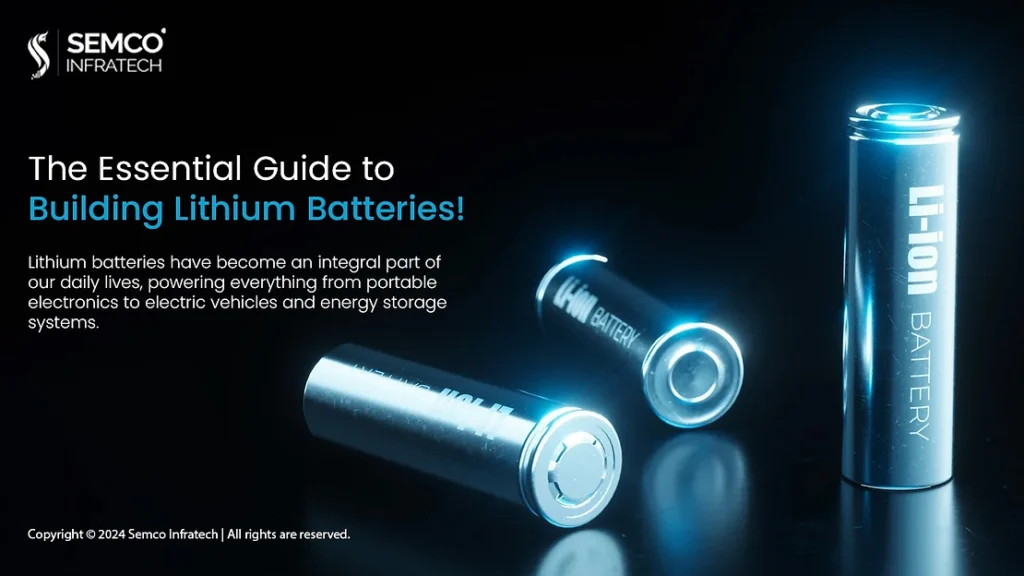
Lithium batteries have become an integral part of our daily lives, powering everything from portable electronics to electric vehicles and energy storage systems.
It is crucial to make sure lithium batteries are assembled and used safely and effectively. We will examine the necessary safety measures and methodical assembly techniques in this guide to guarantee the longevity and functionality of lithium batteries.
I. Lithium Battery Assembly Method
To correctly assemble lithium batteries, take the following actions:

Prepare materials and tools:
- Lithium Battery Monomer: Depending on your requirements, such as lithium-ion or lithium polymer batteries, select the right lithium battery monomer.
- Protection Circuit Board: This board keeps an eye on and protects important variables like current, voltage, and temperature.
- Wire: used to link the protection circuit board and lithium battery monomers.
- Battery Clip: Holds the circuit board in place and fixes the lithium battery monomer.
- Battery Pack Housing: a structure that holds and protects lithium battery packs.
Check the materials:
Verify the integrity of the protection circuit board and lithium battery monomer before assembling. Make sure their parameters and specifications fit the requirements. To ensure that your intended application is met, pay close attention to the capacity, voltage, and maximum charge/discharge current.
Connect the protection circuit board:
Make sure the connection between the protection circuit board and the lithium battery monomer is stable and accurate by adhering to the pin layout on the board. Positive and negative pins on most circuit boards must line up with the matching electrodes of the battery monomer.
Fix the protective circuit Board:
Attach the protection circuit board to the lithium battery monomer using tape or other appropriate techniques. This keeps it from becoming loosened or moving. To prevent short circuits and other safety hazards, make sure there is no metal contact making contact with the battery monomer and circuit board.
Connection Wire:
As required, attach wires, making sure the connection is secure, to the positive and negative terminals on the protection circuit board. Use welding or other appropriate techniques to reduce resistance at the connection.
Assemble the battery pack:
Assembled lithium battery monomers should be placed inside the battery pack housing and fastened as needed. Lithium battery monomers should be kept properly spaced apart to dissipate heat and avoid short circuits.
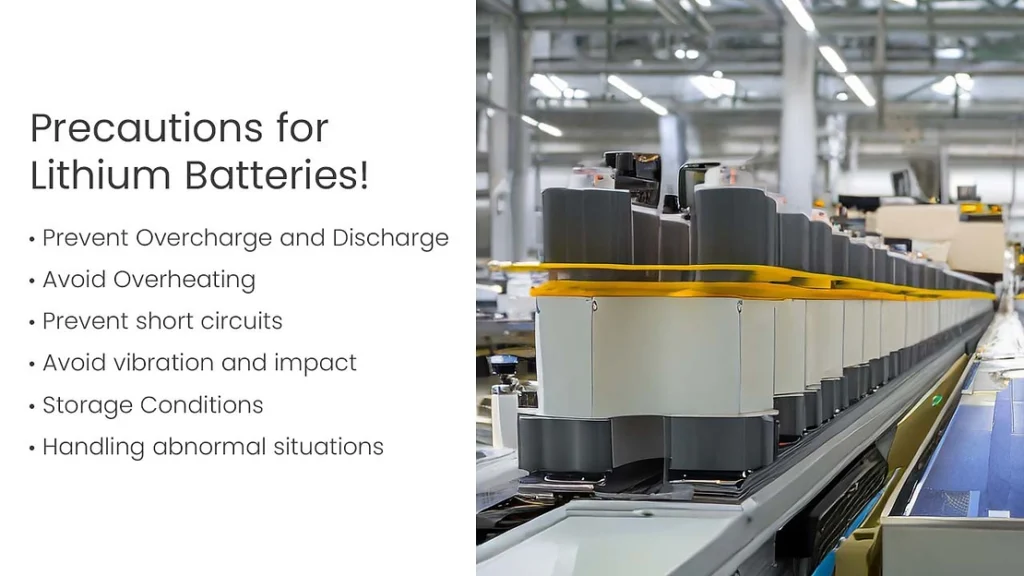
II. Precautions for Lithium Batteries
To ensure the safe use of lithium batteries, observe these precautions:
Prevent Overcharge and Discharge:
Avoid excessive charging and discharging as they can degrade or damage battery performance. To avoid overcharging and over-discharging, use protective circuit boards and set appropriate voltage ranges.
Avoid Overheating:
Safety risks from overheating include fires and explosions. To keep battery temperature within a safe range, avoid overcharging, over-discharging, and extended high-load use.
Prevent short circuits:
Excessive currents from short circuits can result in explosions and fires. Make sure that nothing metallic or conductive comes into contact with the positive and negative terminals of the battery during assembly and use.
Avoid vibration and impact:
During assembly and use, keep lithium batteries safe from intense vibration and outside forces. Use appropriate fixation and buffering techniques, particularly for applications such as electric vehicles and mobile devices.
Storage Conditions:
When storing lithium batteries that won’t be used for a long time, make sure the space is dry, well-ventilated, and has the right amount of humidity and temperature. Avoid placing the batteries in extremely hot or cold conditions.
Handling abnormal situations:
In cases of abnormal occurrences like heating, smoke, or leakage, cease use immediately and handle the situation properly. To avoid safety incidents, dispose of or handle abnormal lithium batteries carefully. Adhere to all applicable regulations.
III. Interpretation of Lithium Battery Parameters
Understanding lithium battery parameters is essential for selecting the right battery for your needs:
Capacity:
The capacity of a lithium battery, expressed in Ah, represents its electrical energy storage and release capacity. Longer usage periods and greater energy storage are provided by larger-capacity batteries.
Voltage:
The potential difference between the positive and negative electrodes of a lithium battery is measured in Voltage or volts, or V.
Maximum Charge and Discharge Current:
This parameter (measured in amperes, A) shows the maximum continuous current that a lithium battery can deliver. Overcharging and discharging at higher than recommended currents can cause damage and overheating.
Cycle Life:
The number of charge and discharge cycles that a battery can withstand and still retain 80% of its capacity is known as cycle life. Longer battery life is correlated with higher cycle life.
Self-Discharge Rate:
The self-discharge rate, represented as a percentage, indicates how rapidly a lithium battery loses capacity when not in use. Long stretches of inactivity cause less capacity loss due to lower self-discharge rates.
Conclusion
Lithium battery assembly and use necessitate close attention to detail and adherence to safety protocols. Make careful material selections and make sure all connections and fixations are stable before assembling. To ensure the safety and functionality of lithium batteries, steer clear of overcharging, short circuits, and excessive charging and discharging while using them. Making the appropriate decisions for various applications is aided by familiarity with the various lithium battery parameters.

The variation in lithium battery parameters, such as capacity, internal resistance, and open circuit voltage, is mainly due to inconsistencies. These inconsistencies occur during production and worsen over time.
Definition of Consistency
Currently, Cell Consistency in Lithium Battery Assembly means bringing together important characteristic parameters of a group of batteries. It’s a relative concept, with no “most consistent,” only “more consistent.” Ideally, each parameter in multiple cell strings within the same pack should stay within a small range for consistency.
When considering time, consistency involves maintaining all characteristic parameters throughout the entire life cycle of all cells in the pack. This helps reduce capacity reduction inconsistency, internal resistance growth inconsistency, and aging rate inconsistency. Ultimately, the focus is on ensuring consistency for the entire pack’s lifespan.
The Concept of Inconsistency
The inconsistency of lithium battery parameters mainly involves capacity, internal resistance, and open circuit voltage. The voltage represents the initial battery voltage during assembly, while internal resistance is the AC internal resistance when fully charged, and capacity is the discharge capacity after full charging.
As the battery undergoes continuous charge and discharge cycles, the state of each individual cell (SOC, voltage, etc.) becomes increasingly different. Additionally, the varying usage environment within the lithium battery pack affects each cell differently.
This gradual amplification of inconsistency during use can accelerate the performance degradation of some cells and eventually lead to premature failure of lithium battery packs.
Note: SOC refers to the remaining power of the battery and is an important parameter for battery use. It is used to estimate the overcharge and over-discharge of the battery.
Causes of Inconsistency
The inconsistency of lithium battery packs is a gradual process. Over time, the differences between individual batteries within the pack increase. Additionally, the battery pack is influenced by its usage environment. As time goes on, the inconsistencies among individual batteries are amplified, leading to accelerated performance degradation of some batteries and eventual failure of the entire pack.
The inconsistency of lithium battery packs is primarily influenced by two factors:
1. Technical issues and uneven materials during manufacturing result in small differences between battery materials. After the pack is put into use, variations in electrolyte density, temperature, ventilation conditions, self-discharge rate, and charging/discharging processes may lead to differences in capacity and internal resistance among batteries from the same batch.
2. When used in a vehicle, factors such as electrolyte density, temperature, ventilation conditions, self-discharge rate, and charging/discharging processes of each battery within the pack can also impact consistency.
Scope of Evaluation of Consistency
My understanding is that the consistency of all cells is crucial, whether they are in series or parallel. Here’s a simple example:
In a parallel setup, if cells with low discharge capacity (let’s call them B) are connected in parallel with other normal cells to form a module D, they can become a bottleneck in the entire battery pack’s discharge capacity over time due to faster aging.
In a series setup, if a module D in the whole battery pack has aged more than other modules, it can affect the entire pack’s charging process and lead to imbalances in capacity and internal resistance.
Therefore, ensuring consistency across all power batteries is essential, not just within individual modules.
Hazards and Problems Caused by the Inconsistency of Lithium Battery Packs:
Poor consistency can lead to uneven real-time voltage distribution during charging and discharging, potentially causing overvoltage charging or under-voltage discharge, which poses safety risks.
Here are the details:
- Capacity loss: The capacity of the weakest cell determines the capacity of the entire battery pack, following the “barrel principle.”
- Life loss: Cells with lower capacity may reach the end of their lifespan sooner due to excessive output during each cycle, affecting the entire group of cells they are connected to.
- Increased internal resistance: Cells with higher internal resistance generate more heat, leading to accelerated deterioration and further increase in internal resistance.
- Lithium batteries use a protective circuit system to ensure safety. Voltage consistency is crucial, as the protection system relies on voltage monitoring. If one cell reaches protection conditions, the battery circuit is cut off, regardless of the status of other cells. Over time, differences in voltage consistency can lead to loss of battery value and potential safety issues, especially if there are individual protection system failures.
_____________________________________________________________________
About Semco – Established in 2006, Semco Infratech has secured itself as the number 1 lithium-ion battery assembling and testing solutions provider in the country. Settled in New Delhi, Semco provides turnkey solutions for lithium-ion battery assembling and precision testing with an emphasis on Research and Development to foster imaginative, future-proof products for end users.
For More Updates Follow Us
WhatsApp – Facebook – Instagram – Twitter – LinkedIn – YouTube
]]>