With its comprehensive set of attributes, including uniform contact interfaces, low internal resistance, high energy density, exceptional magnification characteristics, and consistent expansion and deformation of the polar sheet, lamination has become a pivotal trend in the future of battery structure development.
In this article, we will delve deeper into the changes happening in the battery manufacturing industry and explore the possible trends that could shape its future.
Single-Machine Efficiency Improvement
Continuous improvement in single-machine efficiency is one of the most significant trends in laminated equipment. Currently, a single machine can produce up to 1GWh of laminated battery cells per year. However, technological advancements and process optimization are expected to push this limit even further in the coming years, with the capacity increasing to 2GWh, 4GWh, and even 8GWh. These improvements will lead to significant cost savings and production capacity enhancements for battery manufacturers.
Product Qualification Rate Improvement
Consistent production of high-quality battery cells is another critical aspect of laminated equipment. Currently, the product qualification rate for laminated battery cells is around 99%. However, with ongoing innovation and quality control measures, this rate is expected to rise significantly to 99.5%, 99.9%, and even 99.99% in the future. This improvement in product qualification will reduce the number of defective battery cells and ensure the production of reliable and high-performance batteries.
Improved Equipment Stability
Equipment stability plays a crucial role in the performance of laminated equipment. Currently, the mean time between failures (MTBF) for these machines is approximately 1,000 hours. However, with advancements in material science and engineering, it is anticipated that the MTBF will extend to thousands of hours in the future. This significant increase in equipment stability will result in reduced downtime, improved production efficiency, and lower maintenance costs.
Intelligent Integration
The future of laminated equipment is marked by greater integration and intelligence. Integrated processes, including die-cutting lamination and data-driven closed-loop intelligence, are set to become standard practices. These integrated systems will automate many manual tasks in the production of laminated battery cells, resulting in improved efficiency, reduced labor costs, and enhanced product quality.
Addressing Challenges: Burrs and Dust Control
While laminated equipment offers significant advantages for battery manufacturing, it also presents certain challenges. One of the primary issues is the generation of burrs and dust during the lamination process. These contaminants can negatively impact the quality and performance of battery cells, making it essential to develop effective control measures. Ongoing research and development efforts are focused on addressing this challenge through innovative material selection, process optimization, and dust collection systems.
Conclusion
In conclusion, the future of laminated equipment in battery manufacturing is bright, with promising trends in single-machine efficiency, product qualification rate, equipment stability, and intelligent integration. However, addressing the challenge of burrs and dust control will require continued innovation and technological advancement. As the battery manufacturing industry continues to evolve, laminated equipment will play an increasingly crucial role in producing high-quality, reliable, and cost-effective batteries for a wide range of applications.
]]>Why remote laser welding reigns supreme:
- Superior welds: The technology delivers high-strength, structurally stiff welds with minimal heat impact and deformation.
- Consistent quality: Precise beam control and accurate weld reproduction ensure exceptional repeatability.
- Fast and efficient: Rapid scan mirror movements and robot coordination minimize cycle times, boosting production output.
Adapting to specific challenges:
Door welding presents unique hurdles depending on the material. While steel welding requires minimal deflection, aluminum demands laser oscillation technology for optimal results.
Meeting modern demands:
Today’s doors prioritize seamless integration, often requiring ultra-long, high-frequency welds. Advanced laser guidance systems handle complex geometries and tilt angles with incredible precision.
Optimizing the process:
Adaptive parameter adjustment compensates for material clearance variations, while dynamic welding further shortens cycles and boosts efficiency.
Unmatched control and monitoring:
Blackbird controllers empower OTF welding with robots or linear axes. Real-time OCT weld tracking synchronizes gap detection and welding, adjusts graphics and oscillation, and even analyzes post-weld surface quality. This low-resolution system captures the workpiece’s optimal contour throughout the process.
Software that empowers:
A powerful software control system allows customization for different process needs. Operators can track and simulate laser movement on the workpiece in real time, keeping them informed and in control.
In conclusion, remote laser welding technology has revolutionized door welding, ensuring high-quality, efficient production while meeting the demands of modern automotive trends.
]]>The process of thermal runaway begins with mechanical abuse, leading to internal diaphragm breakage and resulting in an electrical short circuit. Subsequently, electrical abuse triggers thermal abuse, as short circuits generate heat, initiating chemical reactions at high temperatures. This further exacerbates thermal abuse, creating a self-sustaining cycle. When the accumulated heat reaches a critical level, thermal runaway occurs, potentially leading to an explosive event.
This article provides a detailed analysis of the chemical reactions inside lithium batteries, focusing on positive, negative, and electrolyte perspectives. These reactions are carefully classified based on various trigger temperatures. The study introduces an innovative approach, suggesting the use of gases produced during lithium battery heating for early warning diagnosis. By distinguishing abnormal gases from normal ones, these gases serve as crucial indicators for potential thermal runaway.
Research on Internal Chemical Reactions of Lithium Batteries
Theoretical Basis
It is essential to comprehend the structure of lithium batteries. These batteries consist of a positive electrode, a negative electrode, and an electrolyte, operating based on positive electrode discharge and charging reactions. The electrolyte contains two or more solvents and one or more lithium salts, ensuring the battery’s peak performance.
Research on Chemical Reactions
Positive Electrode and Electrolyte Reaction:
The thermal breakdown of the positive electrode releases oxygen, a key factor in triggering thermal runaway. This oxygen, along with other reactions, sets off a chain effect that leads to thermal runaway.
Negative Electrode and Electrolyte Reaction:
The negative electrode’s surface area is crucial in its reaction. When the Solid Electrolyte Interface (SEI) decomposes, it exposes the negative electrode to the electrolyte, impacting subsequent reactions.
Electrolyte Reaction:
The breakdown of solute LiPF6 and its interactions with other components such as DEC and HF influence the overall chemical environment within the battery.
Trigger Sequence of Chemical Reactions
The chemical reactions inside lithium batteries follow a sequence of trigger temperatures. Each reaction stage, from LiPF6 decomposition at 60-70°C to diaphragm dissolution at 130-190°C, is crucial for understanding the thermal runaway process.
Early Warning and Diagnostic Strategy
Early warning diagnosis relies on distinguishing gases produced under normal and abnormal conditions. The unique content, change rate, and type of these gases offer valuable clues for early warning systems. Abnormal gases such as CO2 and PF5 differ significantly from normal gases like CO and C2H4, allowing for targeted sensor implementation and accurate diagnosis thresholds.
]]>Understanding Laser Ultrasonic Technology:
As a versatile non-destructive testing technique, laser ultrasound is proving to be revolutionary. Its capacity to perform non-destructive testing of component defects and residual stress positions it as a leader in residual stress non-destructive testing technologies. This prominence has attracted global attention, with scientific researchers and engineering technicians embracing its capabilities.
The Ingenious Interaction of Laser and Material:
The story of laser ultrasonic technology starts with the interaction between a laser and materials. Invented in the 1960s, lasers, known for their monochromaticity, energy concentration, and strong directionality, have been widely used. When a laser shines on the surface of a metal or non-metallic material, the absorbed energy turns into thermal energy, creating an uneven temperature gradient field. This thermal expansion creates a stress field, causing the distribution of stress in the form of transient ultrasonic pulses. The outcome: the creation of ultrasonic waves.
Applications in Various Industries:
Laser ultrasonic detection technology has diverse applications across various industries, each reaping the benefits of its unique features.
1. Aviation Industry:
- Composite Plate Detection: Laser ultrasonic technology is excellent at detecting composite plates with large, curved surfaces and high temperatures, which are crucial in the aviation industry.
- Health Monitoring of Composite Structures: By offering a non-contact detection method, laser ultrasound plays a vital role in monitoring the health of complex composite structures.
2. Pipeline Transmission:
- Tiny Crack Detection: Laser ultrasonic non-destructive testing is well-suited for detecting tiny cracks on pipeline surfaces, ensuring safe operation.
- Online Measurement of Steel Pipe Thickness: Using the time interval of laser pulses, online measurement of steel pipe thickness becomes possible, enhancing production efficiency.
3. High-Temperature Alloy:
- Thermodynamic Characterization: Laser ultrasonic detection aids in studying the thermodynamic properties crucial for high-temperature alloys, impacting aerospace and biomedical industries.
4. Additive Manufacturing:
- Real-time Monitoring: In the field of metal additive manufacturing, laser ultrasonic technology enables real-time monitoring of workpiece quality, addressing challenges posed by void cracks and pores.
5. Wind Power Blades:
Defect Characterization: Laser ultrasound excels in locating and characterizing defects in wind power blades, contributing significantly to quality inspection.
Advanced Detection Capabilities:
Laser ultrasonic detection technology is notable for being classified into electrical and optical methods. Electrical methods, which include both contact and non-contact types, use piezoelectric transducers and electromagnetic-acoustic transducers. On the other hand, optical methods, which employ non-interferometry and interference techniques, offer flexibility and precision in defect identification.
Economic Value and Industry Adoption:
When assessing the economic value of laser ultrasonic detection, a crucial factor is its competitive advantage in situations involving extensive manual operations, as seen in the aerospace industry. The use of laser ultrasound in projects like F-22 and F-35 has shown significant savings in both capital and labor costs compared to traditional ultrasound technology. Lockheed Martin Airlines’ experience highlights the system’s reliability and stability, requiring minimal maintenance.
The Efficiency Quotient:
Although laser ultrasonic technology has advanced significantly, the intricate interaction between lasers and materials presents an opportunity for further exploration. Nevertheless, there is undeniable potential for its wider application in industrial nondestructive testing, especially in the aerospace sector. As technology continues to progress, laser ultrasonic detection remains a symbol of precision, providing industries with a dependable and innovative tool to ensure the integrity and safety of critical components.
The Readability Factor:
Focused on readability, laser ultrasonic detection technology goes beyond traditional testing, bringing in an era where defects are not just identified but eliminated with unmatched precision and efficiency. As industries adopt this transformative technology, the vision of a flawless manufacturing landscape becomes a tangible reality. Guided by the precision of laser ultrasonic detection, the journey toward perfection continues to reshape the future of industrial testing, offering safer, more reliable products for a world that demands nothing less.
]]>I. Lithium battery assembly method
1. Prepare materials and tools:
The following materials and tools are required to assemble lithium batteries:
- Lithium battery monomer: choose the appropriate lithium battery monomer according to your needs, common are lithium-ion batteries, lithium polymer batteries, etc.
- Protection circuit board: used to monitor and protect parameters such as voltage, temperature, and current of lithium batteries.
- Wire: used to connect lithium battery monomer and protect the circuit board.
- Battery clip: used to fix lithium battery monomer and protect the circuit board.
- Battery pack housing: used to fix and protect lithium battery packs.
2. Check the materials:
Before assembly, it is necessary to check whether the lithium battery monomer and protective circuit board are intact and ensure that their specifications and parameters meet the requirements. Special attention should be paid to parameters such as the capacity, voltage and maximum charge and discharge current of the lithium battery monomer to ensure that it is suitable for the required application scenarios.
3. Connect the protection circuit board:
Connect the protection circuit board to the lithium battery monomer to ensure that the connection is stable and connect correctly according to the pins of the circuit board. Generally speaking, there will be pins marked with positive and negative poles on the protective circuit board, which need to be connected to the positive and negative electrodes of the lithium battery monomer.
4. Fixed protective circuit board:
Use tape or other fixing methods to fix the protective circuit board on the lithium battery monomer to prevent it from loosening or shifting. Ensure that there is no metal contact between the protective circuit board and the lithium battery monomer to avoid short circuit or other safety problems.
5. Connection wire:
Connect the wire to the positive and negative electrodes on the protective circuit board as needed to ensure a firm connection. Use welding or other appropriate connection methods to ensure that the connection resistance between the wire and the pins of the protective circuit board is as small as possible.
6. Assemble the battery pack:
Put the assembled lithium battery monomer into the battery pack housing and fix it as needed. Ensure the proper spacing between lithium battery monomers to dissipate heat and prevent short circuits.
II. Precautions for lithium batteries
1. Prevent overcharge and discharge:
Excessive charging and discharging of lithium batteries will lead to the degradation or even damage of battery performance. Therefore, when using lithium batteries, excessive charging and discharging should be avoided, which can be achieved by reasonably setting the charging and discharging voltage range and using protective circuit boards.
2. Avoid overheating:
Overheating of lithium batteries can cause safety hazards, and even fires and explosions. Therefore, when using lithium batteries, over charging, over-dipation and long-term high-load use should be avoided to control the battery temperature within a safe range.
3. Avoid short circuit:
The short circuit of lithium batteries will lead to excessive current, causing fire and explosion. Therefore, when assembling and using lithium batteries, metal objects or conductive objects should be avoided from touching the positive and negative electrodes of lithium batteries to avoid short circuit.
4. Prevent vibration and impact:
Lithium batteries should be avoided from severe vibration and external force during assembly and use to avoid damaging the structure and performance of the battery. Appropriate fixing and buffering measures should be taken in applications such as mobile devices and electric vehicles.
5. Pay attention to storage conditions:
lithium batteries that are not used for a long time should be stored in a dry, ventilated and suitable temperature environment to avoid too high or too low temperature and humidity.
6. Handling abnormal situations:
When there are abnormal situations of lithium batteries, such as heating, smoke, leakage, etc., they should be stopped immediately and properly handled. Do not discard or dispose of abnormal lithium batteries at will and should be handled in accordance with relevant regulations to avoid safety accidents.
III. Interpretation of lithium battery parameters
1. Capacity: The capacity of a lithium battery indicates its ability to store and re lease electrical energy, in Ah. The larger the capacity, the more energy the battery stores and the longer the use time.
2. Voltage: The voltage of a lithium battery indicates the potential difference between its positive and negative electrodes in volts (V). Different types of lithium batteries have different nominal voltages, such as 3.6V, 3.7V, 7.2V, etc.
3. Maximum charge and discharge current: The maximum charge and discharge current of a lithium battery indicates the maximum current that the battery can continuously supply, in units of ampere (A). Exceeding the maximum charge and discharge current will cause the battery to overheat and damage.
4. Cycle life: The cycle life of lithium batteries indicates the number of times the battery can carry out charge and discharge cycles, usually based on the 80% capacity retention rate. The higher the cycle life, the longer the battery life.
5. Self-discharge rate: The self-discharge rate of lithium batteries indicates the speed of self-discharge of the battery when not in use, in percentage. The lower the self-discharge rate, the smaller the capacity loss of the battery when it is not used for a long time.
The assembly and use of lithium batteries require careful operation and relevant safety procedures. When assembling, pay attention to the selection and quality of materials to ensure that the connection is stable and fixed. When using, it is necessary to avoid excessive charging and discharging, overheating, and short circuit to ensure the safety and performance of lithium batteries. At the same time, understanding the various parameters of lithium batteries can help us correctly select and use lithium batteries to meet different application needs.
]]>Let’s explore the detailed realm of dual-beam laser welding, including its methods, impact on welding quality, and wide range of applications.
I. Unveiling Dual-Beam Laser Welding
A. Implementation Methods
Dual-beam laser welding splits a laser into two beams using optical methods or different types of lasers, like CO2, Nd: YAG, and high-power semiconductor lasers. The goal is to improve assembly accuracy, stabilize the welding process, and enhance weld quality. The implementation of dual-beam welding includes two main methods: transmission focusing and reflection focusing. Adjusting angles through focusing mirrors, and collimators, and using solid-state lasers are techniques that contribute to the versatile implementation of dual-beam welding.
B. Welding Principle and Method
Dual-beam laser welding brings flexibility to adjusting welding temperature fields, beam spacing, and energy distribution modes. This adaptability allows for changes in the keyhole’s existence mode and the flow of liquid metal in the melting pool. The three common beam layout methods—serial, parallel, and hybrid—further expand the possibilities, creating distinct states such as single molten pool, shared molten pool, and separated molten pool. Each state has unique characteristics that affect the welding process’s outcomes.
II. Impact of Welding Process on Quality
A. Serial Beam-Energy Ratio
The beam-energy ratio has a big impact on weld formation. By adjusting the ratio, it’s possible to control the depth of the weld and reduce defects. Specific beam-energy ratios result in even welds, fewer thermal cracks, and improved microstructure performance, particularly in high-carbon steel and alloy steel.
B. Serial Beam Spacing
In serial welding, beam spacing is vital for surface forming. The right spacing ensures smoother and more visually appealing welds. The spacing choice also affects cross-sectional forming, influencing defects such as porosity.
C. Parallel Beam-Energy Ratio
Parallel dual-beam welding presents a more uniform and beautiful weld surface compared to its serial counterpart. The beam-energy ratio’s variation affects the appearance of the weld, with certain ratios leading to defects like cracks and pores.
D. Parallel Beam Spacing
The spacing between parallel beams influences surface morphology. Optimal beam spacing results in visually appealing welds with minimal defects, emphasizing the importance of careful parameter selection.
III. Application Examples
A. Stitching Board
Dual-beam laser welding finds application in stitching boards, particularly in the automotive industry. By optimizing beam energy ratios and spacing, the width of the weld can be controlled effectively.
B. Aluminum and Steel Heterogeneous Metal
Research on aluminum and steel heterogeneous metal joints reveals that dual-beam laser welding reduces the thickness of intermetallic compounds, enhancing the overall welding quality.
C. Aluminum-Lithium Alloy T-Type Connector
Exploring the mechanical properties of aluminum-lithium alloy laser welding joints demonstrates the technology’s impact on microhardness, tensile properties, and fatigue properties.
IV. Dual-Beam Laser Powder Cladding Welding
A. High Firmness of Solder Joint
The use of dual-beam laser powder fusion welding enhances the firmness of solder joints. The larger fusion area obtained by interacting with two molten pools results in elongated
and robust solder joints.
B. High Weldability and Repeatability
Compared to single-beam laser welding, the dual-beam method reduces the stringent requirements on process parameters for fine bridge wires. This improvement enhances weldability and repeatability.
V. Conclusion
As we observe the dynamic dual-beam laser welding technology, its profound and versatile impact becomes clear. From shaping the future of manufacturing to influencing weld quality across materials, this technology leads the 21st-century manufacturing revolution. The precision, adaptability, and efficiency of dual-beam laser welding are reshaping our understanding of what’s possible in welding technology.
]]>
When the high-voltage system works, the current is as high as dozens of amps or even hundreds of amps.
Compared with traditional low-voltage connectors, high-voltage connectors need to withstand higher voltage and currents. In the face of harsh environments such as vibration and bumps, rain, snow and sands, the probability of failure of the high-voltage connection system is also greatly increased, and once a problem occurs, it will be overheated. The function of the vehicle will cause combustion accidents and threaten the safety of users. Therefore, new energy vehicles put forward higher requirements for the safety and reliability of high-voltage connectors.
In order to ensure the quality of high-voltage connectors, manufacturers will comprehensively test their electrical performance, mechanical properties, air tightness, environmental adaptability, etc. during production offline, but this does not ensure the safety and reliability of high-voltage connectors in the later use process.
Field use and experimental data show that among the various failure modes of automobile high-voltage connectors, the proportion of electrical contact failure is the largest, about 45%, and various failure modes account for as shown in the figure below. Major manufacturers have done a lot of work to prevent the failure design of high-voltage connectors, such as the common high-voltage interlock function, but there are still many high-voltage connector failure problems in the terminal market.
- Electrical contact failure
The reasons for electrical contact failure are generally insufficient electrical contact pressure, contact wear and so on. The structure of high-voltage connectors for new energy vehicles is shown in the figure below, which is mainly composed of contact parts, shielding layers, shells and accessories. Among them, the contact parts are responsible for transmitting electrical energy, which is the main weak link that causes electrical contact failure.
Due to the vibration of the whole vehicle, plug eccentricity, metal deformation, foreign body interference and other reasons, the contact parts of the high-voltage connector contact parts are poor and the contact resistance increases, resulting in serious heating when the passage of high current.
- Insulation failure
The surface of the high-voltage connector may fuse with the surface water film to form an ionic conductive channel. The reason for this result is that some of the insulation surfaces are difficult to clean, so they must be strictly screened during the quality inspection process. It should be noted that the voltage of the test insulation resistance is DC, and the test resistance strength is alternating current. The power of the test insulation resistance is much lower than the power of the test resistance.
- Mechanical connection failure
The mechanical connection failure of the electric connector is manifested in a variety of failure modes, which is inseparable from the process and use process. Welding, crimping, installation and stress state are the weak links of mechanical connection. Mechanical connection failure usually exposes problems during use. For products with high requirements, early screening and evaluation tests can be carried out to improve the reliability of use.
Conclusion
In fact, with the development of science and technology, there are more and more problems that people need to solve the failure of high-voltage connectors, and the failure modes of high-voltage connectors are far more than these, such as assembly errors, size insistence, air leakage, elastic component fracture, etc. Early screening and evaluation tests can be carried out in actual production operations. As a link between high-voltage components of new energy vehicles, its reliability directly affects the function and safety of vehicles.
]]>
The introduction of lithium batteries has transformed portable electronics and electric vehicles by offering a small and effective power supply. However, a significant problem that has arisen with these developments is thermal runaway, a situation where a battery experiences unmanageable self-heating, resulting in severe consequences.
In this article, we investigate the complex internal chemical reactions of lithium batteries, examining the reasons and outcomes of thermal runaway. Additionally, we present an innovative gas-based early warning system to identify and address this potentially hazardous event.
Research on the Internal Chemical Reaction of Lithium Batteries:
Understanding the complexities of thermal runaway requires a grasp of the internal chemical reactions in lithium batteries. The theoretical basis, structure, and operational principles of lithium batteries form the basis for this examination. Within the battery, three main chemical reactions take place: between the positive electrode and electrolyte, between the negative electrode and electrolyte, and within the electrolyte itself. It is crucial to identify the solid and gas products of each reaction and comprehend the associated heat release.
The reaction between the positive electrode and electrolyte involves intricate processes that contribute to the overall energy storage and release mechanisms. Similarly, the reaction between the negative electrode and electrolyte plays a crucial role in the operation of lithium batteries. At the same time, the electrolyte itself undergoes chemical changes that impact the overall stability and performance of the battery. By analyzing these reactions, researchers gain valuable insights into the factors contributing to thermal runaway.
Trigger Sequence of Chemical Reactions:
Understanding the sequence of chemical reactions is crucial for predicting and preventing thermal runaway. Researchers have identified a series of reactions triggered at various temperatures, from solute decomposition at low temperatures to diaphragm dissolution at high temperatures. This sequence involves the rupture of the Solid Electrolyte Interphase (SEI), reactions at the negative and positive electrodes, adhesive decomposition, and diaphragm dissolution.
By examining the order of these reactions, scientists can identify the temperature ranges where thermal runaway is more likely to occur. This knowledge is essential for developing effective early warning systems and preventive measures to protect lithium battery applications.
Early Warning and Diagnostic Strategy:
One innovative method for reducing the risks of thermal runaway is the creation of a gas-based early warning system. This novel approach utilizes the unique characteristics of gases produced during regular battery operation compared to those generated during thermal runaway, including differences in content, rate of change, and type.
Implementing this strategy involves incorporating specialized sensors capable of detecting and analyzing the gases released by lithium batteries. By establishing specific thresholds for gas content and change rates, researchers can create a dependable diagnostic system that can detect abnormal conditions signaling an imminent thermal runaway.
The selection of suitable sensors is a crucial aspect of this strategy. High-precision sensors that can accurately distinguish between normal and abnormal gas emissions are essential for the effectiveness of the early warning system. Additionally, setting precise thresholds ensures that false alarms are minimized while still providing a timely warning of potential issues.
Conclusion
In conclusion, the thermal runaway of lithium batteries presents a major challenge that requires innovative solutions. By exploring the internal chemical reactions, understanding the trigger sequence, and suggesting a gas-based early warning strategy, researchers can pave the way for safer and more reliable lithium battery applications. As technology continues to advance, these insights will be crucial in ensuring the continued growth and sustainability of industries relying on lithium batteries.
]]>
The heartbeat of electric vehicles lies within the intricate dance of charging and discharging processes that occur in their power batteries. These essential operations are the linchpin of energy conversion, steering the electric vehicle toward sustainable and efficient performance.
In this article, we delve into the detailed steps of both the charging and discharging processes, shedding light on the critical role of the Battery Management System (BMS). Additionally, we’ll debunk some prevalent myths associated with these processes.
Charging Process
Power Connection
- The charging journey begins with the electric vehicle connecting to a power source, typically an electric vehicle charging pile or power station.
- The charging pile or power station supplies current and voltage, facilitating the transmission of electrical energy to the vehicle’s battery pack.
Battery Management System (BMS) Control
- The BMS takes the helm during charging, meticulously overseeing and controlling various battery parameters, including voltage, temperature, and current.
- Its primary function is to ensure a safe charging range, preventing overcharging and overheating, which can compromise battery integrity.
Charging Process
- As the chemical reaction within the battery initiates, electrons flow from the negative electrode to the positive electrode.
- Simultaneously, lithium-ion migrates from the positive electrode to the negative electrode, engendering a redox reaction that converts electrical energy into chemical energy.
Charging Rate
- The charging rate is influenced by the battery’s design and the power supply’s capacity.
- Fast charging systems can imbue substantial power within a short timeframe, reaching up to 80 percent in 30 minutes. However, careful temperature control is imperative to avert overheating.
Debunking Related Myths
- Leaving the Battery Plugged After Full Charge Damages it: Modern BMS technology mitigates the risk of overcharging, making it safe to leave the battery plugged in. However, continuous high-voltage charging might slightly impact long-term battery health.
- Fast Charging Always Damages the Battery: While fast charging generates more heat, leading to accelerated wear, modern electric vehicles are designed to handle fast charging without significant harm. The key lies in balancing fast charging with regular, slower charging.
Discharge Process
Electric Drive Requirements
- When the electric vehicle is in motion or engaged in other tasks, the BMS orchestrates the discharge process in accordance with the vehicle’s operational needs.
Discharge Process
- During discharge, the chemical reactions within the battery undergo a reversal.
- Lithium ion moves from the negative to the positive electrode, while electrons flow from the negative to the positive electrode, generating a current that propels the electric vehicle.
Battery Condition Monitoring
- The BMS maintains a vigilant watch over the battery’s status, ensuring cell balance, and voltage stability, and averting over-discharging to safeguard the battery’s lifespan and performance.
Energy Release
- Electric energy is unleashed from the battery to propel the electric vehicle forward.
- The discharge rate is contingent on the acceleration demands of electric vehicles and the battery design.
Conclusion
In essence, the charging and discharging processes encapsulate the fundamental working principles of power batteries. They orchestrate the storage and conversion of electrical energy, providing a sustainable power source for electric vehicles. Crucially, the Battery Management System plays a pivotal role in guaranteeing the safety, stability, and efficiency of these processes, ensuring that electric vehicles continue their journey toward a cleaner and greener future while dispelling common myths that may cloud our understanding of these crucial operations.
]]>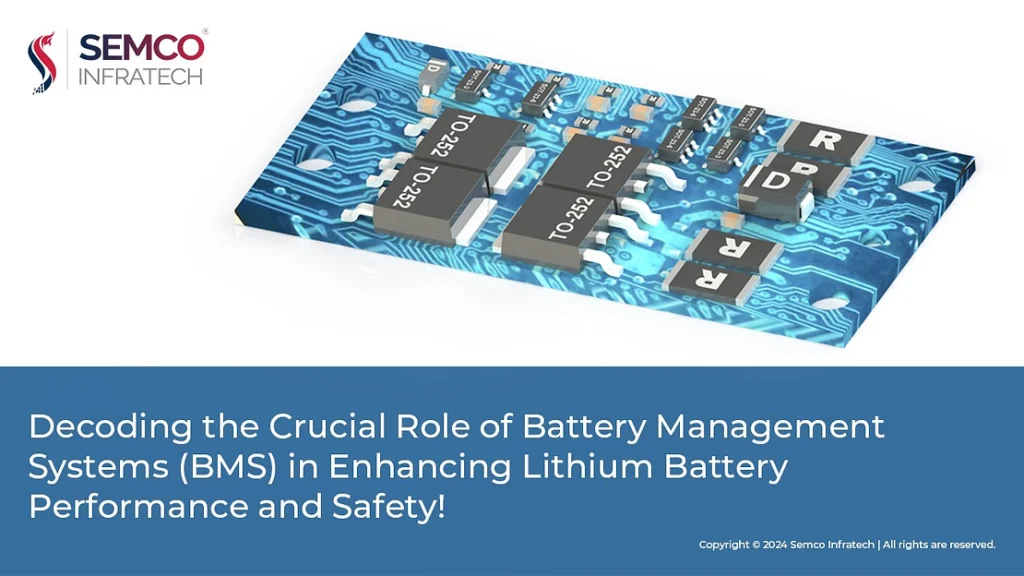
The Battery Management System (BMS) emerges as a critical electronic overseer for lithium batteries, meticulously monitoring voltage, current, temperature, SOC, and various parameters. Its role is pivotal in ensuring the optimal functioning and safety of lithium-ion batteries, particularly during charging and discharging cycles.
Why the Imperative Need for BMS in Lithium Batteries?
- Safety Imperatives:
Lithium batteries exhibit sensitivity, where even a single over-discharge can inflict irreversible harm. In extreme scenarios, overheating or overcharging may lead to catastrophic outcomes, such as thermal runaway, battery rupture, or explosions. The integration of BMS becomes indispensable to rigorously regulate the charging and discharging processes, mitigating risks of overcharging, over-discharging, and overheating.
- Functional Requirements:
Understanding the battery’s characteristics, especially the State of Charge (SOC) parameters, is crucial when employing lithium batteries. BMS not only predicts remaining battery power but also ensures real-time measurement of SOC, aligning with the diverse needs of customers.
- Addressing Inconsistencies in Large-Capacity Batteries:
Large-capacity lithium batteries often grapple with inconsistencies impacting their charge-discharge capabilities and overall lifespan. BMS steps in with its equalization capabilities, resolving these disparities and enhancing the overall performance of lithium batteries.
- Temperature Dynamics:
Batteries exhibit distinct performance at varying temperatures. The optimal operating temperature for lithium-ion batteries falls within the range of 25~40℃. BMS plays a pivotal role in controlling the ambient temperature during battery operation, mitigating adverse effects on SOC, open circuit voltage, internal resistance, available power, and overall battery service life.
- Understanding the Nature of Overcharge and Overdischarge:
The charging and discharging process involves the intercalation and deintercalation of lithium ions on the electrode plate. Overcharge can lead to the collapse of the positive electrode lattice, forming lithium dendrites that may damage the battery. On the flip side, over-discharge can diminish the activity of the positive electrode material, causing a sharp drop in battery capacity and potential structural damage.
Essential BMS Functions:
- Single cell voltage collection
- Single battery temperature collection
- Battery pack current detection
- Monomer/Battery SOC measurement and calculation
- Battery State of Health (SOH) evaluation
- Charge and discharge balancing function
- Insulation detection and leakage protection
- Thermal management control (cooling, heating)
- Key data records (cyclic data, alarm data)
- Battery failure analysis and online alarm
- Communication function (with chargers, motor controllers, etc.)
BMS Topologies:
Distributed: Functions are distributed to each battery, communicating with the main control through a bus.
- Advantages: Simple design, few connections, high reliability, easy expansion.
- Disadvantages: Requires a control board for each battery, cumbersome and costly installation.
Centralized: All functions are completed by the main control, directly connected to the battery through wires.
- Advantages: Simple design.
- Disadvantages: Involves long and numerous connections, low reliability, limited management of multiple batteries.
Modular: One master and multiple slaves structure, where functions are completed by the slave control.
- Advantages: No need for a control circuit board on each battery, flexible connection, easy expansion.
- Disadvantages: Requires consideration of communication isolation, diverse communication, and complex control.
Selecting the Ideal BMS:
- Prioritize stability and reliability.
- Align functions with customer needs.
- Evaluate factors such as voltage, temperature, current accuracy, SOC calculation, equalization function, thermal management, and fault alarms.
In essence, the Battery Management System (BMS) stands as the guardian of lithium batteries, ensuring their safety, performance, and longevity through meticulous monitoring and control mechanisms.
]]>